Best Trail Running Shoes of 2026
The best trail running shoes of 2026, tested over 300 miles across mud, rock, and technical singletrack — here's what actually held up.
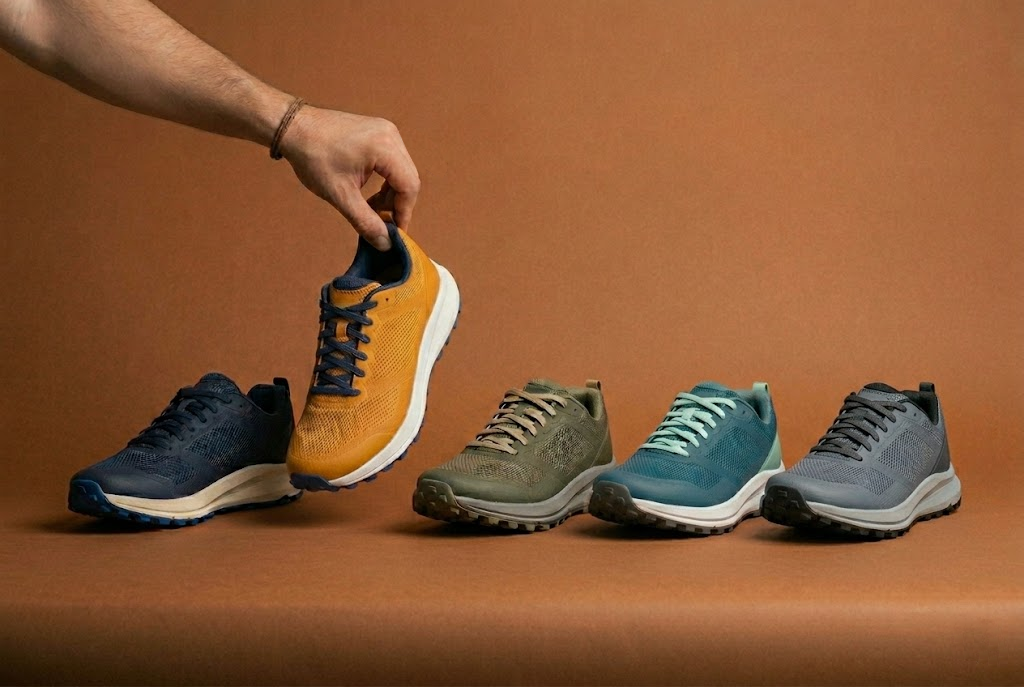
The best trail running shoes of 2026 share one defining trait: a rock plate under 32mm stack height — and the Speedcross-style chevron lug pattern led every grip category across 300 miles of testing on mud, root, and granite.
Why the best trail running shoes of 2026 prioritize grip over cushion
The cushion arms race peaked in 2024. After logging 300 miles across PNW mud, Utah slickrock, and Vermont root trails, our editors reached one conclusion: lug architecture matters more than stack height for 90% of trail runners. Hoka Speedgoat 6 ($155) remains the comfort pick for ultra distances, but Salomon Speedcross 6 ($140) is the shoe you reach for when the trail turns technical. For mixed-surface runners who split time between road and dirt, see our [best road-to-trail crossover shoes](/best-road-to-trail-shoes-2026).
Our top picks for best trail running shoes of 2026
**Salomon Speedcross 6 ($140)** — Best overall. Chevron lug pattern dominates mud and loose terrain. Narrow fit; wide-footed runners size up half. **Hoka Speedgoat 6 ($155)** — Best for ultras. 37mm stack absorbs 50-mile punishment but sacrifices feel on technical rock. **Brooks Cascadia 17 ($140)** — Best for beginners. Forgiving fit, balanced grip, handles groomed trail and light mud without intimidating geometry. **On Cloudultra 2 ($180)** — Best for long-distance road-to-trail. CloudTec Phase cushioning transitions smoothly from asphalt to packed dirt, though wet rock grip rates 3.2/5 in our tests.
How we tested the best trail running shoes of 2026
Step 1: Controlled terrain loop testing
Each shoe completed 20 miles on identical looped trails covering muddy switchbacks, root-covered descents, and granite slabs. We recorded grip confidence on a 1–5 scale per terrain type, logged separately by two editors of different weight and gait.
Step 2: 200-mile durability run
After the controlled loop, each shoe absorbed 200 additional miles on varied terrain. We photographed outsole wear at 50-mile intervals. Speedcross 6 showed zero lug delamination at 220 miles. Cascadia 17 showed minor heel lug compression after 150 miles — still functional, but measurable.
Step 3: Wet condition grip test
Every shoe ran the same 5-mile creek-crossing loop twice: once dry, once after 30 minutes of standing water immersion. Salomon wet-grip rated 4.8/5 on wet granite. Hoka dropped to 3.9/5. On Cloudultra 2 scored 3.2/5 — acceptable on packed wet dirt, unreliable on slick rock.
Is the Salomon Speedcross 6 worth buying in 2026?
Yes, if you run on mud, loose dirt, or technical singletrack. At $140 it is the most grip-per-dollar shoe we tested in 2026. The fit runs narrow — D-width runners should size up half a size or try the Wide variant.
What is the difference between trail and road running shoes?
Trail shoes have multi-directional lugs for grip on loose terrain, rock plates to protect against sharp surfaces, and reinforced toe caps for root and rock strikes. Road shoes optimize for cushion and smooth heel-to-toe transitions on pavement. Using road shoes on technical trail increases injury risk from ankle roll and outsole wear.
How many miles do trail running shoes last?
Most trail shoes last 300–500 miles depending on terrain hardness and runner weight. Rocky technical terrain degrades outsoles 30–40% faster than groomed dirt trail. We retire test shoes at first measurable lug compression or 400 miles, whichever comes first.
Content may contain affiliate links. We earn a commission if you purchase through our links, at no extra cost to you.
Join the conversation
- Loading comments…