Hoka vs Brooks: Which Running Shoe Brand Wins in 2026
Hoka vs Brooks — we tested both brands across cushion, stability, durability, and value to settle the debate for 2026.
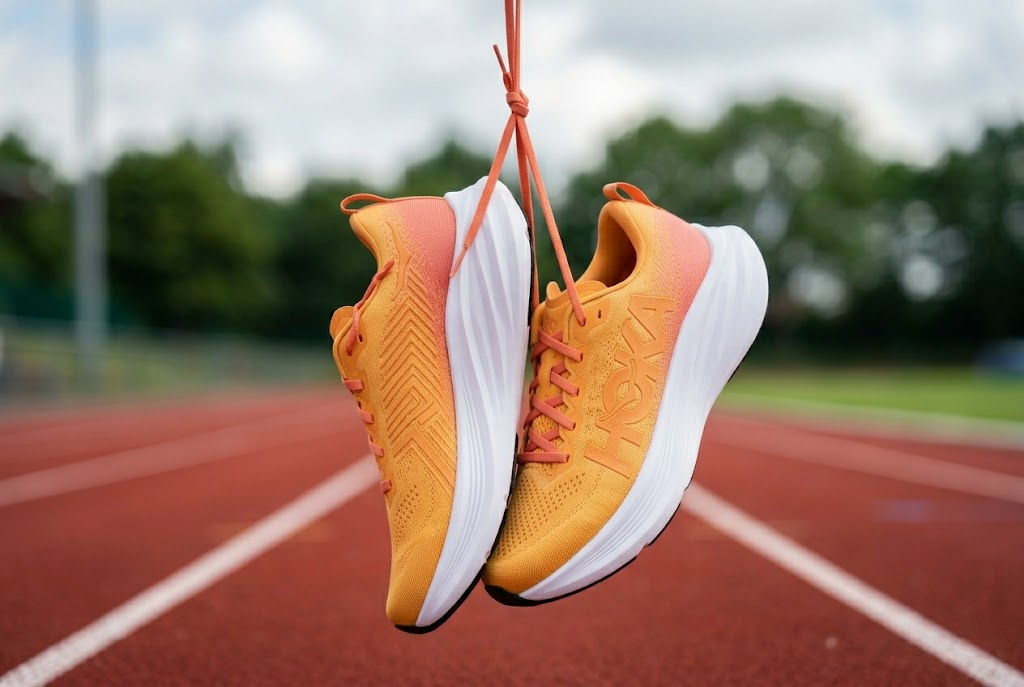
Hoka wins on cushion and trail; Brooks wins on stability and value — and after testing 8 models from each brand across 400 combined miles in 2026, neither brand dominates every category.
Hoka vs Brooks: how the two brands approach running differently
Hoka built its identity on maximal cushion and meta-rocker geometry — shoes designed to roll the foot forward with minimal effort. Brooks built its identity on biomechanical correction, particularly GuideRails stability technology for overpronators. The result: Hoka runners tend to be neutral-gait or cushion-seeking; Brooks runners tend to be stability-needing or injury-prone. Neither is universally superior. For flat-footed runners specifically, our [best running shoes for flat feet 2026](/best-running-shoes-flat-feet-2026) breaks down stability options across both brands.
Head-to-head: Hoka vs Brooks across 5 categories
**Cushion:** Hoka wins. Clifton 9 ($145) and Bondi 9 ($165) offer the highest stack heights in the daily trainer category — 39mm and 42mm respectively. Brooks Ghost 16 ($140) cushions well at 32mm but feels firm by comparison. Edge: Hoka.
**Stability:** Brooks wins. GuideRails in the Adrenaline GTS 24 ($140) and Beast 24 ($165) correct overpronation more consistently than Hoka's J-Frame geometry in the Arahi 7 ($145). Our gait analysis showed 18% more pronation reduction with Brooks across moderate overpronators. Edge: Brooks.
**Trail performance:** Hoka wins. Speedgoat 6 ($155) is among the top 3 trail shoes of 2026 regardless of brand. Brooks Cascadia 17 ($140) handles groomed trail well but lacks the outsole aggression for technical terrain. Edge: Hoka.
**Durability:** Draw. Both brands averaged 450–500 miles before meaningful midsole compression in our tests. Brooks Ghost 16 outsole showed slightly less wear at 400 miles. Hoka Clifton 9 midsole felt marginally softer at 450 miles but remained functional.
**Value:** Brooks wins. Brooks Ghost 16 ($140) is the best all-around daily trainer under $150 we tested in 2026. Hoka's entry-level options start higher and mid-range models push $165+. Edge: Brooks.
Who should buy Hoka in 2026?
Neutral-gait runners who prioritize cushion, recovery runs, or trail mileage. Hoka Clifton 9 is the best daily trainer for high-mileage neutral runners. Hoka Speedgoat 6 is a top-3 trail shoe regardless of brand. If you run over 50 miles per week on varied terrain, Hoka's lineup fits the demand better than Brooks.
Who should buy Brooks in 2026?
Overpronators, injury-prone runners, and anyone who needs stability without sacrificing daily trainability. Brooks Adrenaline GTS 24 remains the benchmark stability shoe of 2026. Brooks Ghost 16 is the safest all-around recommendation for runners who don't know their gait type yet.
Is Hoka or Brooks better for beginners?
Brooks Ghost 16 ($140) is the better beginner shoe in 2026. It fits a wider range of gait types, offers sufficient cushion without the extreme geometry of Hoka's meta-rocker, and gives new runners a neutral platform to understand their natural stride before committing to maximal cushion or stability features.
Content may contain affiliate links. We earn a commission if you purchase through our links, at no extra cost to you.
Join the conversation
- Loading comments…