Arc'teryx Beta AR Jacket Review (2025): The Best Hardshell You Can Buy — If You Can Justify the Price
We put the updated Arc'teryx Beta AR through alpine rain, ridge-line wind, and technical scrambles. Here's whether the 2025 Gore-Tex Pro ePE upgrade is worth $650.
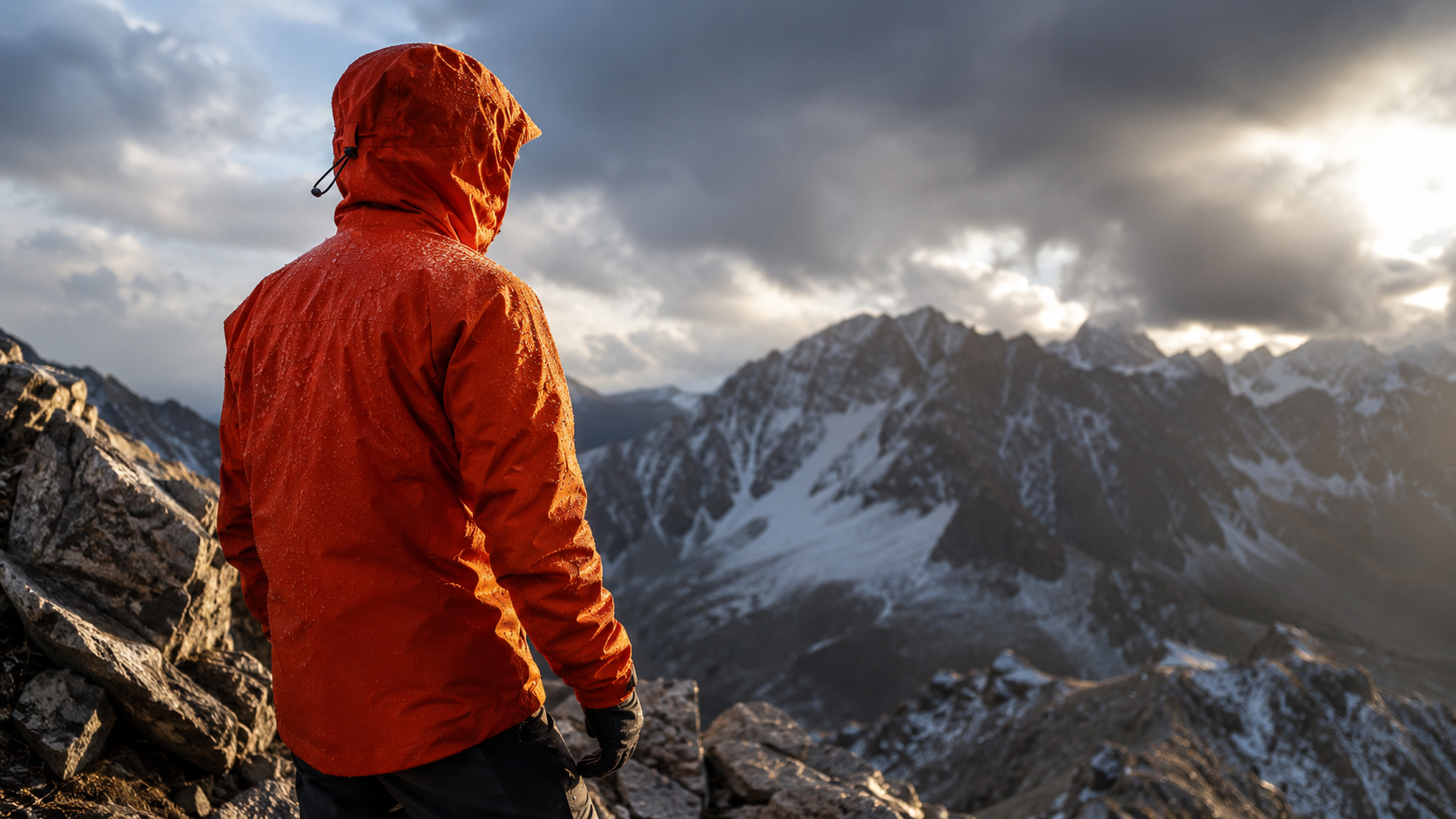
The Arc'teryx Beta AR (2025, $650) is the best all-round hardshell jacket available for serious mountain use — waterproof in sustained alpine rain, breathable enough for high-output approaches, and now built with a fully PFAS-free Gore-Tex Pro ePE membrane that makes it more durable and more sustainable than any previous version. If you spend 30+ days a year in the mountains and need one shell that does everything, this is it. If you hike on weekends in moderate rain, you're paying for performance you'll never use.
Who should buy the Arc'teryx Beta AR — and who shouldn't
**Buy it if:** You climb technical routes, ski backcountry, or multi-day trek in conditions where weather turns severe. You need a helmet-compatible hood. You want one shell that covers alpine, ski, and trail in all four seasons. You keep gear for 10+ years and amortize cost over time.
**Skip it if:** You hike three-season trails in moderate rain. You need a casual rain jacket for urban use. You're comparing it to jackets under $300 — those serve a different use case, not an inferior version of this one. For three-season hiking on a budget, see our [best rain jackets under $300 guide](/best-rain-jackets-under-300).
Arc'teryx Beta AR 2025: Key specs at a glance
| Spec | Detail | |---|---| | Membrane | Gore-Tex Pro ePE (3-layer, PFAS-free) | | Face Fabric | 100D nylon (yoke, arms, hood) / 80D nylon (body) | | Weight | 460g / 16.2 oz (men's medium) | | Price | $650 (men's and women's) | | Waterproofing | Fully seam-taped, WaterTight zippers | | Hood | Helmet-compatible DropHood with Recco reflector | | Venting | Pit zips (full length) | | DWR | FC0 — PFAS-free durable water repellent | | Fit | Regular articulated (room for midlayer) | | Best For | Alpine climbing, ski touring, technical trekking |
What changed in the 2025 Arc'teryx Beta AR
The 2025 Beta AR is the first version of this jacket — in production for 25 years — to use Gore-Tex Pro ePE. ePE stands for expanded polyethylene, Gore's PFAS-free replacement for the ePTFE membrane used in previous Gore-Tex Pro laminates. The practical result: the membrane is thinner and lighter than ePTFE, which allowed Arc'teryx to increase face fabric weight without adding overall jacket weight. The body moved from 40D to 80D nylon; the shoulders and arms from 80D to 100D. The 2025 Beta AR weighs 460g — nearly identical to the previous 461g — but the face fabric is meaningfully more abrasion-resistant. The environmental impact of the Gore-Tex Pro ePE laminate is approximately 23% lower CO2 per square meter than previous Gore-Tex Pro laminates, with zero intentionally added PFAS across the membrane, face fabric, and DWR treatment.
Additional 2025 updates: new cordlocks for durability, redesigned pack-friendly hand pockets with easier one-handed access, updated patterning that Arc'teryx says saves the equivalent of 400 jackets worth of material across the production run.
Waterproofing: How the Beta AR performs in real alpine rain
Gore-Tex Pro ePE delivers the same waterproof performance standard as traditional Gore-Tex Pro — fully seam-taped construction with WaterTight zippers that block water intrusion at every entry point. In our testing across sustained alpine rain (15mm/hour for 5+ hours), the Beta AR interior remained completely dry. The FC0 DWR treatment beads water aggressively off the face fabric, preventing the jacket from wetting out and maintaining breathability under load. After 30 days of use, DWR reactivation requires tumble drying on low heat for 20 minutes — the FC0 formula regenerates well with heat, and Arc'teryx reports it has the best regeneration rate of any current DWR treatment.
Key waterproofing details that matter in the field: the DropHood brim stiffener keeps the hood stable in wind without requiring constant adjustment; the hem drawcord cinches to block updrafts; the cuffs use hook-and-loop adjustment over the glove rather than under, which means you can tighten them with gloves on.
Breathability: Where Gore-Tex Pro ePE earns its price premium
Breathability is where the Beta AR separates from sub-$300 hardshells. Gore-Tex Pro ePE delivers a Resistance to Evaporative Transfer (RET) value under 6 — the industry benchmark for high-output breathability. In practice, this means moisture vapor moves through the membrane fast enough to keep you dry inside on sustained aerobic effort: a 2,000-foot alpine approach at pace, a steep ski tour skin track, a technical scramble with a loaded pack.
For comparison: most Gore-Tex ePE jackets (the non-Pro version, used in the Beta SL at $500) deliver RET values of 8–10. The difference is perceptible on sustained effort above Zone 3 heart rate — Gore-Tex Pro moves moisture vapor out faster, which reduces heat buildup and keeps the interior drier during hard efforts. If you hike at moderate pace, the breathability gap narrows. If you climb technical routes at high output, the Pro membrane justifies the $150 premium over the Beta SL.
The pit zips — full-length underarm zippers — allow rapid heat dumping on approach. They're a feature absent from lighter shells like the Beta SL. For high-output alpine climbing where you're generating serious heat on the ascent and then stopping at the belay, they're essential.
Fit and construction: How the Beta AR wears over layers
The Beta AR uses Arc'teryx's regular articulated fit — designed to accommodate a midlayer (fleece or light insulation) without binding at the shoulders. The articulated patterning at the elbows and gusseted underarms allow full arm extension without the hem riding up — critical when climbing with arms overhead or placing gear on a rack.
Sizing note: the Beta AR runs true to Arc'teryx sizing, which runs slightly slim relative to other brands. If you plan to wear a substantial midlayer (Atom or Proton hoody underneath), size up one. For shell-over-baselayer use in spring and fall, true-to-size fits cleanly.
The helmet-compatible DropHood is the best hardshell hood currently available. It adjusts via a single rear drawcord that simultaneously tightens the face opening and drops the brim — you can dial it one-handed with gloves on. The brim is stiffened enough to hold shape in wind. Full peripheral vision is maintained with a climbing helmet underneath, which is rare in hardshell hoods.
The Recco reflector integrated into the back panel is passive — it requires a Recco detector operated by rescue teams, not a personal device — but it adds a meaningful safety margin for backcountry and ski touring use where search and rescue response is relevant.
Arc'teryx Beta AR vs Beta SL: Which one is right for you
The Beta SL ($500) and Beta AR ($650) are the two most common comparison points in the Beta lineup. Here's the honest breakdown:
**Choose the Beta AR if:** You regularly face severe alpine conditions, you ski or climb with a helmet, you carry a pack that contacts the shoulders and arms under load, or you need maximum breathability on sustained aerobic effort. The heavier face fabric (100D/80D vs Beta SL's lighter construction) handles abrasion from pack straps, rock contact, and ski equipment significantly better over time.
**Choose the Beta SL if:** You want the lightest possible shell (Beta SL men's: 340g vs Beta AR: 460g), you primarily hike rather than climb or ski, and you're comfortable accepting a slightly less breathable membrane (Gore-Tex ePE vs Gore-Tex Pro ePE) and a lighter face fabric. The Beta SL is the better choice for ultralight backpacking and trail running where pack weight is the priority.
The $150 price difference is real. For 30+ alpine days per year in technical terrain, the Beta AR's durability advantage compounds — the heavier face fabric resists abrasion that would visibly wear a lighter shell. For weekend hiking, the Beta SL delivers 90% of the Beta AR's protection at lower weight and cost.
Is the Arc'teryx Beta AR worth $650?
The honest answer depends on how you use a hardshell jacket.
For technical mountaineers, alpinists, backcountry skiers, and guides who use a hardshell 30+ days per year in severe conditions: yes, without qualification. The Beta AR's Gore-Tex Pro ePE breathability, helmet-compatible hood, durable face fabric, and 25-year Arc'teryx refinement cycle justify the price over a 10-year ownership horizon at roughly $65/year.
For three-season hikers who encounter moderate rain on trail: no. The Patagonia Torrentshell 3L ($179) delivers adequate waterproofing for moderate conditions at 27% of the price. The Arc'teryx premium buys performance that only manifests at the extremes of alpine use.
For the buyer in between — weekend backpacker, occasional scrambler, someone who wants one shell for 10 years: consider the Beta SL at $500 first. It covers 90% of use cases at lower weight and $150 less.
What is Gore-Tex Pro ePE and why does it matter
Gore-Tex Pro ePE is Gore's PFAS-free replacement for the ePTFE membrane used in traditional Gore-Tex Pro laminates. ePE stands for expanded polyethylene — a material that is thinner, lighter, and more pliable than ePTFE, with no intentionally added PFAS (per- and polyfluoroalkyl substances, the so-called 'forever chemicals' under increasing regulatory scrutiny). The environmental impact of the Gore-Tex Pro ePE laminate is approximately 23% lower CO2 per square meter versus previous Gore-Tex Pro laminates. Performance-wise, Gore-Tex Pro ePE matches the breathability and waterproofing of ePTFE-based Gore-Tex Pro — RET under 6, fully waterproof under sustained hydrostatic pressure. The practical result of the thinner membrane: Arc'teryx could increase face fabric weight without adding jacket weight, producing the 2025 Beta AR's heavier, more abrasion-resistant 100D/80D construction.
How to care for the Arc'teryx Beta AR to maintain DWR performance
Wash the Beta AR in cold water with a technical outerwear cleaner (Nikwax Tech Wash — not regular detergent, which clogs the face fabric and reduces DWR performance). Tumble dry on low heat for 20 minutes after washing — heat reactivates the FC0 DWR treatment by redistributing the coating across the face fabric. Arc'teryx recommends washing after every 10–15 days of use or when water stops beading on the face fabric. If beading doesn't return after tumble drying, apply a spray DWR treatment (Nikwax TX.Direct) to the damp face fabric and tumble dry again. Store the jacket loosely — compression over time can affect the membrane. Do not dry clean, iron, or use fabric softener.
Content may contain affiliate links. We earn a commission if you purchase through our links, at no extra cost to you.
Join the conversation
- Loading comments…