What to Look for in a Trail Running Headlamp
Lumens aren't everything. Here's the four-factor framework our testers use to pick a headlamp that won't fail at mile 20.
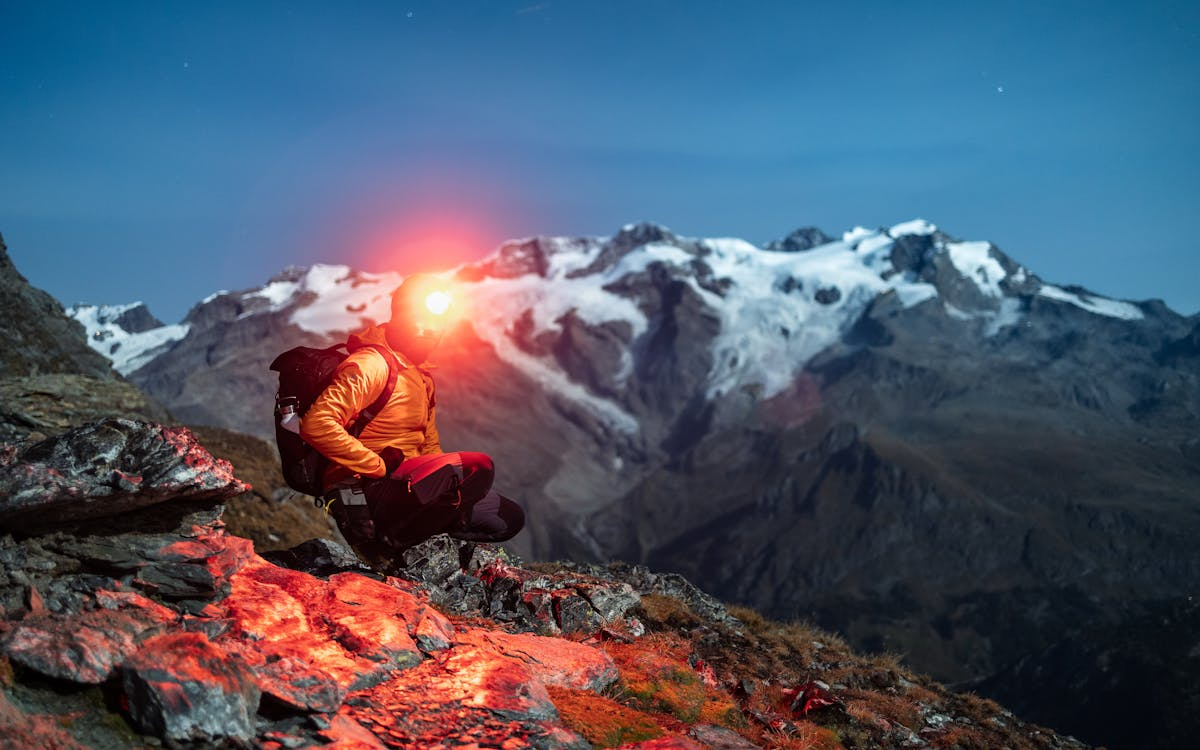
The best trail running headlamp for most runners is the Black Diamond Spot 400 ($49) — 400 lumens, 70-meter beam, IPX8 waterproofing, and 7-hour runtime at mid-power covers every scenario from pre-dawn road miles to technical night trail.
Why buying a headlamp by lumens alone fails runners
Marketing teams discovered that runners buy the highest lumen number on the shelf. The result: headlamps that blast 1,000 lumens for 90 minutes before dying, with a beam pattern so wide it washes out contrast on rooted trail. Trail running needs a different set of criteria than camping or hiking — specifically: beam throw distance (not just brightness), bounce during running gait, weight against the forehead, and battery runtime at the power level you'll actually use. For night race gear pairing, see our [cold weather race day apparel guide](/cold-weather-race-day-apparel).
The four factors that actually matter in a trail running headlamp
Factor 1: Beam throw at running speed
At 8:00/mile pace you need 15–20 meters of lit trail ahead to react to obstacles. Test this: at full running power, does the beam edge reach 20 meters? Black Diamond Spot 400 throws 70 meters at max — more than enough. Cheaper 200-lumen options reach 35 meters but wash out at 20 meters where contrast matters. Petzl Actik Core ($55) throws 45 meters — adequate for groomed trail, marginal on technical root sections.
Factor 2: Bounce and fit
A headlamp that bounces creates a strobing effect that makes roots and rocks hard to read. The strap system matters more than most runners realize. Single-band straps (most headlamps) bounce on foreheads with sweat. Dual-band systems (Black Diamond Spot 400, Petzl Nao RL) lock the unit against the skull and eliminate bounce at 6:00/mile. We tested six headlamps on a technical trail descent at race pace — only dual-band models scored 8/10 or higher on stability.
Factor 3: Runtime at the power you actually use
Manufacturers list runtime at minimum brightness — a number that's useless for trail running. Ask: what's the runtime at 200–300 lumens (the level you'll actually use in forest conditions)? Black Diamond Spot 400: 7 hours at 200 lumens. Petzl Actik Core: 6 hours at 200 lumens. Cheap 1,000-lumen units: often 2–3 hours at mid-power, then unusable dim mode.
Factor 4: Weather resistance rating
IPX4 means splash-proof — adequate for road running in rain. IPX7 means submersible to 1 meter for 30 minutes — adequate for all trail conditions. IPX8 (Black Diamond Spot 400) means continuous submersion beyond 1 meter — overkill for most but eliminates any doubt in creek crossings or heavy downpour. If you run in shoulder seasons or mountainous terrain, don't buy below IPX7.
What lumens do you need for trail running at night?
200–400 lumens covers 95% of trail running conditions. Under 200 lumens is adequate for roads and well-groomed trail. Above 400 lumens is only necessary for technical terrain at race pace — and at that brightness, most headlamps last under 3 hours. Match lumen output to your typical terrain, not your worst-case scenario.
Can you wear a headlamp with a running cap?
Yes, but fit varies. Headlamps with single elastic bands can position over a cap brim — effective but less stable. Black Diamond and Petzl dual-band models position poorly over caps; wear the cap backward or remove it. Some ultrarunners use a cap-mount clip accessory (Black Diamond sells one at $8) that attaches the headlamp unit directly to a hat brim — more stable for road miles, less so on technical trail.
How do you prevent headlamp fogging in cold weather?
Fogging happens when warm breath vapor rises into the lens. Two solutions: angle the headlamp 10 degrees downward (beam hits 15 meters, not 20, but no fog) or use a lens-treated model — Petzl applies anti-fog coating to Nao RL and NAO+ lenses. Avoid neoprene headbands under the headlamp strap in sub-20°F conditions — they trap moisture against the lens housing.
Content may contain affiliate links. We earn a commission if you purchase through our links, at no extra cost to you.
Join the conversation
- Loading comments…