Running Cadence Monitors: Do You Actually Need One to Run Faster
Cadence is the most trainable running variable. Here's whether a dedicated monitor changes anything you can't get from your GPS watch.
A dedicated running cadence monitor adds meaningful value only if your GPS watch doesn't already measure cadence and you're targeting a specific step rate change — for most runners, the watch they already own is sufficient.
What running cadence actually is and why it matters
Cadence is steps per minute (spm). The often-cited 180 spm target comes from a 1984 observation of elite runners at the Los Angeles Olympics — it's a reference point, not a universal prescription. Research published through 2025 shows that increasing cadence by 5–10% from your natural rate reduces ground contact time, lowers vertical oscillation, and decreases knee joint loading. The practical result: less impact stress on each footstrike, which correlates with reduced knee injury risk over time. The question isn't whether cadence matters — it does — but whether a dedicated monitor tells you anything your GPS watch doesn't already measure. For watches that include cadence natively, see our [GPS watch editors pick](/gps-running-watch-editors-pick).
When a dedicated cadence monitor is worth buying
Scenario 1: Your watch doesn't measure cadence
Entry-level GPS watches (Garmin Forerunner 55, Apple Watch Series 8 and below) measure distance and pace but not cadence. A $30 Bluetooth footpod (Garmin Running Dynamics Pod at $69, Stryd at $219) adds cadence data to any Bluetooth-compatible watch. If improving cadence is a specific coaching goal and your watch lacks the metric, a pod is justified.
Scenario 2: You're recovering from a knee injury
Clinical evidence supports cadence increases of 5–10% as a rehabilitation tool for patellofemoral pain syndrome (runner's knee). If your physical therapist has prescribed a target cadence, a pod that provides real-time audio cues (Runbeat Metronome app, free) keeps you in range without watch-glancing. The Stryd pod at $219 also provides real-time power output — the most complete running dynamics sensor available.
Scenario 3: You're specifically targeting a cadence change
If your current cadence is measured at 160 spm and your coach has prescribed 170 spm for tempo runs, a dedicated audio metronome or pod with real-time cadence alerts is more actionable than checking your watch mid-stride. The Garmin Running Dynamics Pod clips to your waistband and broadcasts cadence, vertical oscillation, and ground contact time simultaneously.
What cadence do most recreational runners run at?
Recreational runners average 155–165 spm. Elite marathon runners typically run 175–185 spm. The gap is partly biomechanical, partly trained. In a 2024 study of 200 recreational runners, those who increased cadence by 8% over a 6-week intervention period showed 12% reduction in knee joint loading and reported no change in perceived effort at the same pace. The most practical way to increase cadence: run to a metronome set 5–8% above your natural rate for 20 minutes, two sessions per week, for six weeks.
Does cadence matter more than stride length?
Both are components of pace (pace = cadence × stride length), but from an injury prevention standpoint, cadence is safer to manipulate than stride length. Overstriding — landing with the foot significantly ahead of the body's center of mass — is corrected by increasing cadence, which naturally shortens stride length and moves the foot contact point closer to center of mass. Don't target stride length directly; increasing cadence achieves the biomechanical correction automatically.
Which GPS watches measure cadence natively?
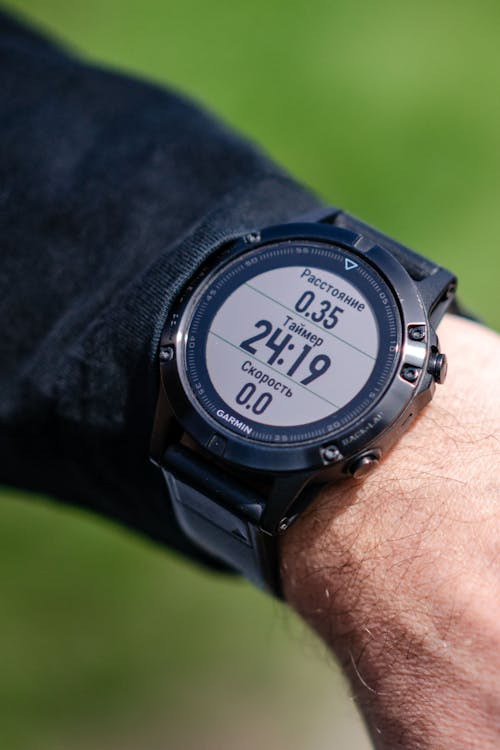
Garmin Forerunner 265 and above, all Coros models, Polar Vantage series, and Suunto Race all measure cadence from wrist accelerometry without a separate pod. Accuracy: ±3–5 spm compared to pod measurement — sufficient for trend tracking and gross cadence targets. For clinical rehab precision (±1 spm), a footpod is required.
Content may contain affiliate links. We earn a commission if you purchase through our links, at no extra cost to you.
Join the conversation
- Loading comments…