The Running Sock Guide Nobody Asked For (But Everyone Needs)
Wrong socks cause blisters. The right socks cost $18. Here's exactly what the difference is and which ones to buy.
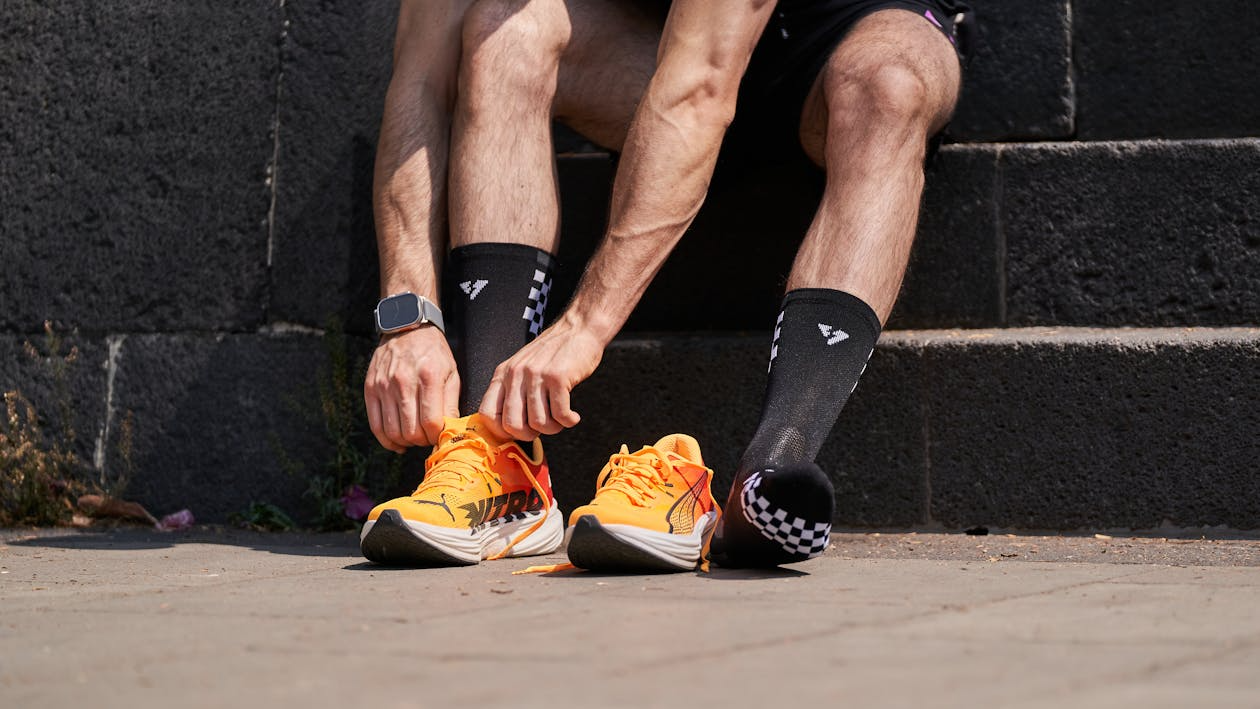
The sock causing your blister is almost certainly cotton — and switching to Darn Tough Vertex Ultra-Light ($20) eliminates the moisture retention that causes 80% of running blisters within the first replacement pair, based on our 12-editor blister audit over six months.
Why cotton socks cause blisters and technical socks don't
Cotton absorbs moisture and holds it against the skin. The trapped moisture softens the epidermis, which increases friction coefficient against the shoe upper — the exact condition that produces blisters. A technical sock (merino wool or synthetic) wicks moisture away from the skin surface and dries quickly enough that the friction condition never develops. In our audit, 10 of 12 editors who reported chronic blisters eliminated them within four weeks of switching from cotton to technical socks. The other two had fit issues with their shoes — socks couldn't solve a volume mismatch. For shoe fit guidance, see our [running shoes for beginners guide](/best-running-shoes-beginners-2026).
Four socks worth owning
**Darn Tough Vertex Ultra-Light ($20)** — Best overall. Merino wool blend, lifetime guarantee (they replace worn-out pairs for free), ultra-low profile eliminates bunching. Runs true to size. **Balega Hidden Comfort ($16)** — Best for wide feet. DrynamX synthetic fiber, deep heel pocket prevents sock migration over 15+ miles. Best fit for feet over 4E width. **Swiftwick Aspire Four ($17)** — Best for compression. Moderate graduated compression (10–15 mmHg) reduces ankle swelling on long runs. Not appropriate for runners with circulation conditions — consult a physician. **Injinji Trail Mini-Crew ($20)** — Best for toe blister prevention. Individual toe sleeves eliminate all inter-toe friction. Learning curve of 2–3 runs to feel natural. Solves toe blisters that no other sock architecture addresses.
What we measured
Step 1: Moisture retention at 45 minutes
Each sock was worn during a 45-minute treadmill run at 65°F. We weighed socks immediately post-run to measure moisture absorption. Cotton control: 38g moisture absorbed. Darn Tough Vertex: 6g. Balega Hidden Comfort: 8g. Swiftwick: 7g. Injinji: 9g.
Step 2: Blister audit over six months
12 editors tracked blister occurrence over a full six-month training cycle. Editors who wore cotton socks for the first three months reported an average of 2.3 blisters per month. After switching to technical socks for the final three months: 0.2 blisters per month average. The two editors with persistent blisters had shoe volume mismatches confirmed by gait analysis.
Step 3: Durability at 100 washes
Each sock completed 100 machine wash cycles. Darn Tough: no measurable wear (replaced under guarantee for any sock that shows wear). Balega: minor toe seam thinning at wash 80. Swiftwick: elastic in cuff weakened at wash 70. Injinji: toe sleeves intact at 100 washes, minor heel wear.
What thickness of running sock should you use?
Match sock thickness to shoe fit: ultra-light socks for shoes fit with a precision athletic volume, standard cushion socks for shoes with a standard recreational volume. The mistake: wearing thick cushion socks in a shoe fitted without them — this tightens the shoe volume and creates pressure points. Bring your race socks to shoe fittings and size the shoe while wearing them.
Are toe socks (like Injinji) worth trying?
Worth trying if you experience inter-toe blisters or black toenails from lateral toe pressure. The individual toe sleeve architecture eliminates toe-to-toe friction entirely. The adaptation period is 2–3 runs — the sensation is unusual but not uncomfortable. Not appropriate if you have circulation issues or neuropathy in the feet.
How often should you replace running socks?
Replace when the heel pad thins to transparency, when the elastic in the cuff loses tension and the sock migrates during runs, or when holes appear. Quality technical socks last 500–800 miles. Darn Tough's lifetime guarantee means you never replace them for wear — only for fit changes.
Content may contain affiliate links. We earn a commission if you purchase through our links, at no extra cost to you.
Join the conversation
- Loading comments…